Introduction
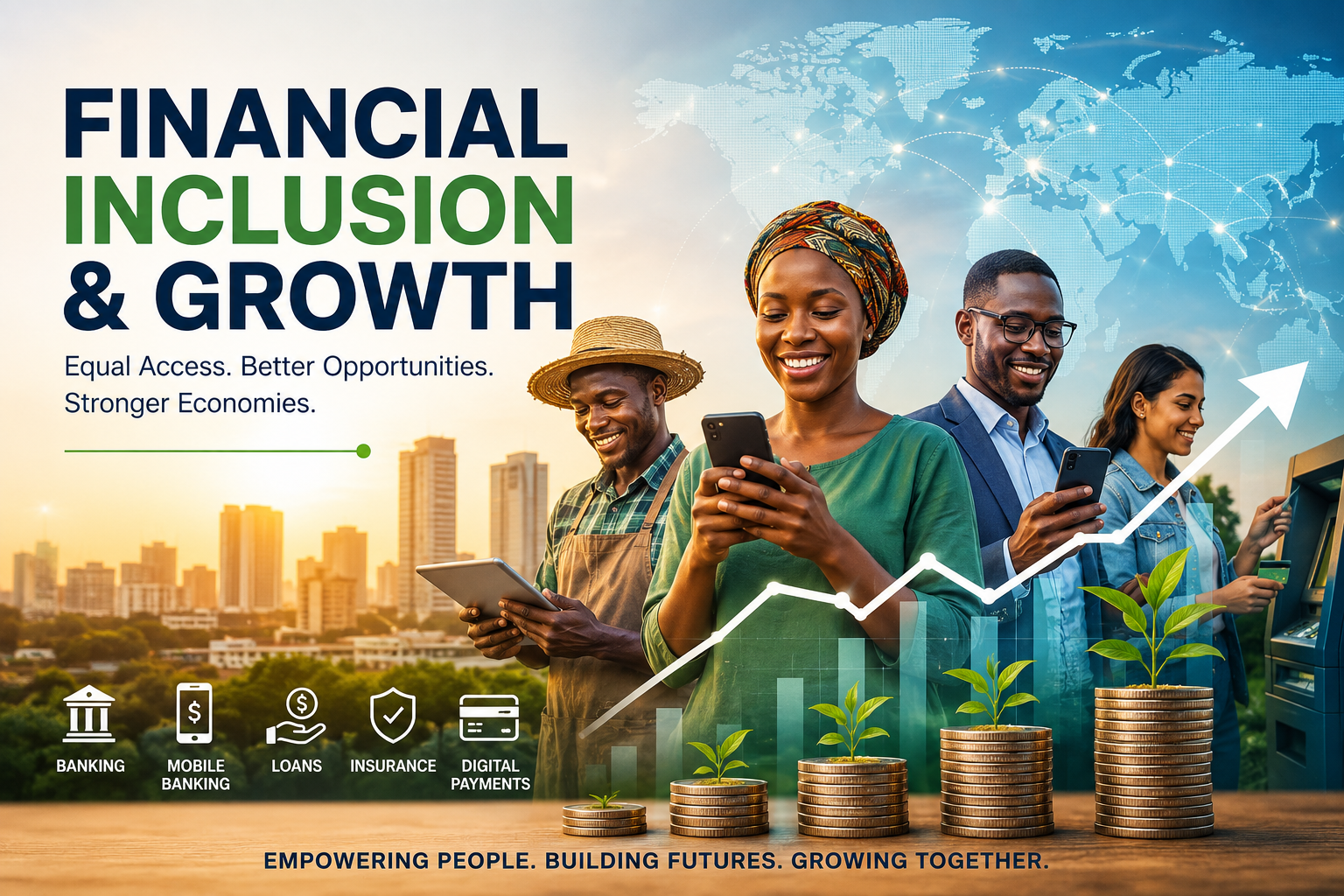
Financial inclusion has become one of the most important drivers of economic development in the 21st century. It refers to ensuring that individuals and businesses have access to affordable, secure, and convenient financial services such as bank accounts, savings, credit, insurance, and digital payment systems.
When people can easily access financial services, they are better equipped to save money, invest in businesses, manage risks, and improve their quality of life. As more citizens participate in the formal financial system, countries experience higher economic growth, lower poverty rates, and stronger financial stability.
What is Financial Inclusion?
Financial inclusion is the process of making financial products and services available to everyone regardless of their income, gender, age, or geographical location.
These services include:
| Financial Service | Purpose | Benefit |
|---|---|---|
| Bank Accounts | Safe storage of money | Reduces cash-related risks |
| Savings Accounts | Encourage saving | Builds financial security |
| Loans & Credit | Access to capital | Supports businesses and personal needs |
| Insurance | Financial protection | Reduces financial losses during emergencies |
| Mobile Banking | Banking through smartphones | Convenient anytime access |
| Digital Payments | Cashless transactions | Faster and more secure payments |
What is Economic Growth?
Economic growth is the increase in the production of goods and services within a country over time. It is commonly measured using Gross Domestic Product (GDP).
Economic growth improves living standards by increasing employment opportunities, boosting incomes, encouraging investment, and expanding businesses.
Major Indicators of Economic Growth
| Indicator | Description |
|---|---|
| GDP Growth | Increase in national production and income |
| Employment Rate | More people working |
| Business Expansion | Growth of small and large businesses |
| Consumer Spending | Increased purchasing power |
| Investment | More local and foreign investment |
| Infrastructure Development | Better roads, healthcare, and education |
Why Financial Inclusion Matters
Millions of people around the world still lack access to basic financial services. Without access to banking, people often struggle to save money securely, obtain credit, or grow their businesses.
Financial inclusion empowers individuals by providing financial tools that improve their economic well-being while helping governments build stronger and more resilient economies.
How Financial Inclusion Promotes Economic Growth
| Area | How Financial Inclusion Helps | Economic Impact |
|---|---|---|
| Entrepreneurship | Access to business loans | More startups and SMEs |
| Agriculture | Farmers receive digital payments and credit | Higher agricultural productivity |
| Education | Savings accounts for education | Better educational outcomes |
| Employment | Business financing creates jobs | Lower unemployment |
| Women Empowerment | Equal access to financial services | Increased household income |
| Digital Economy | Mobile payments reduce transaction costs | Faster economic activities |
Benefits of Financial Inclusion
1. Poverty Reduction
People with access to savings and credit are better able to manage emergencies, invest in education, and improve their standard of living.
2. Business Growth
Small businesses can obtain financing to purchase equipment, hire employees, and expand operations.
3. Increased Employment
As businesses grow, they create new jobs, reducing unemployment and stimulating local economies.
4. Financial Stability
A larger formal financial sector allows governments and financial institutions to monitor economic activities more effectively.
5. Digital Transformation
Digital banking and mobile payment platforms enable secure and efficient financial transactions, particularly in rural communities.
Challenges to Financial Inclusion
| Challenge | Effect |
|---|---|
| Limited Banking Infrastructure | Rural communities remain underserved |
| Low Financial Literacy | People avoid financial services due to lack of knowledge |
| High Banking Costs | Discourages low-income earners |
| Poor Internet Connectivity | Restricts digital banking access |
| Lack of Identification Documents | Prevents account opening |
| Cybersecurity Risks | Reduces trust in digital financial services |
Strategies for Improving Financial Inclusion
| Strategy | Expected Outcome |
|---|---|
| Expand Mobile Banking | Reach remote populations |
| Improve Financial Education | Increase financial literacy |
| Reduce Banking Fees | Encourage more account openings |
| Support FinTech Innovation | Easier access to financial products |
| Government Policies | Promote inclusive financial systems |
| Digital Identity Programs | Simplify customer verification |
Real-Life Examples
Example 1: Small Business Expansion
A local entrepreneur obtains a small business loan to purchase additional equipment. Within a year, the business doubles its production and hires five new employees.
Example 2: Mobile Money for Farmers
Farmers receive payments through mobile wallets instead of cash. They can save money securely and purchase farming supplies more efficiently.
Example 3: Student Savings
A university student opens a savings account to manage tuition and educational expenses, reducing dependence on emergency loans.
The Role of Technology
Technology has transformed financial inclusion through innovations such as:
| Technology | Contribution |
|---|---|
| Mobile Banking | Banking anywhere, anytime |
| Internet Banking | Online financial management |
| Digital Wallets | Cashless transactions |
| FinTech Platforms | Faster loans and payments |
| Artificial Intelligence | Fraud detection and personalized services |
| Blockchain | Secure and transparent transactions |
Future Outlook
As digital technology continues to evolve, financial inclusion will play an even greater role in economic growth. Governments, banks, financial technology companies, and international organizations are working together to ensure that financial services become more accessible, affordable, and secure for everyone.
Expanding financial inclusion is not only about opening bank accounts—it is about creating opportunities for individuals and businesses to participate fully in the economy and improve their quality of life.
Conclusion
Financial inclusion is a cornerstone of sustainable economic development. By providing affordable access to financial services, countries can reduce poverty, support entrepreneurship, create employment, and accelerate economic growth. Investing in inclusive financial systems benefits individuals, businesses, and society as a whole, making economies stronger, more resilient, and better prepared for future challenges.
Frequently Asked Questions (FAQ)
| Question | Answer |
|---|---|
| What is financial inclusion? | Access to affordable and useful financial services for everyone. |
| Why is financial inclusion important? | It reduces poverty, supports businesses, and promotes economic growth. |
| Who benefits from financial inclusion? | Individuals, businesses, governments, and the overall economy. |
| What are examples of financial services? | Savings accounts, loans, insurance, digital payments, and mobile banking. |
| How does technology improve financial inclusion? | Through mobile banking, digital wallets, online banking, and FinTech innovations. |
Suggested SEO Meta Title: Financial Inclusion & Growth: Benefits, Challenges, and Economic Impact
Suggested Meta Description: Learn how financial inclusion promotes economic growth by improving access to banking, credit, digital payments, and financial services. Explore its benefits, challenges, and future opportunities.